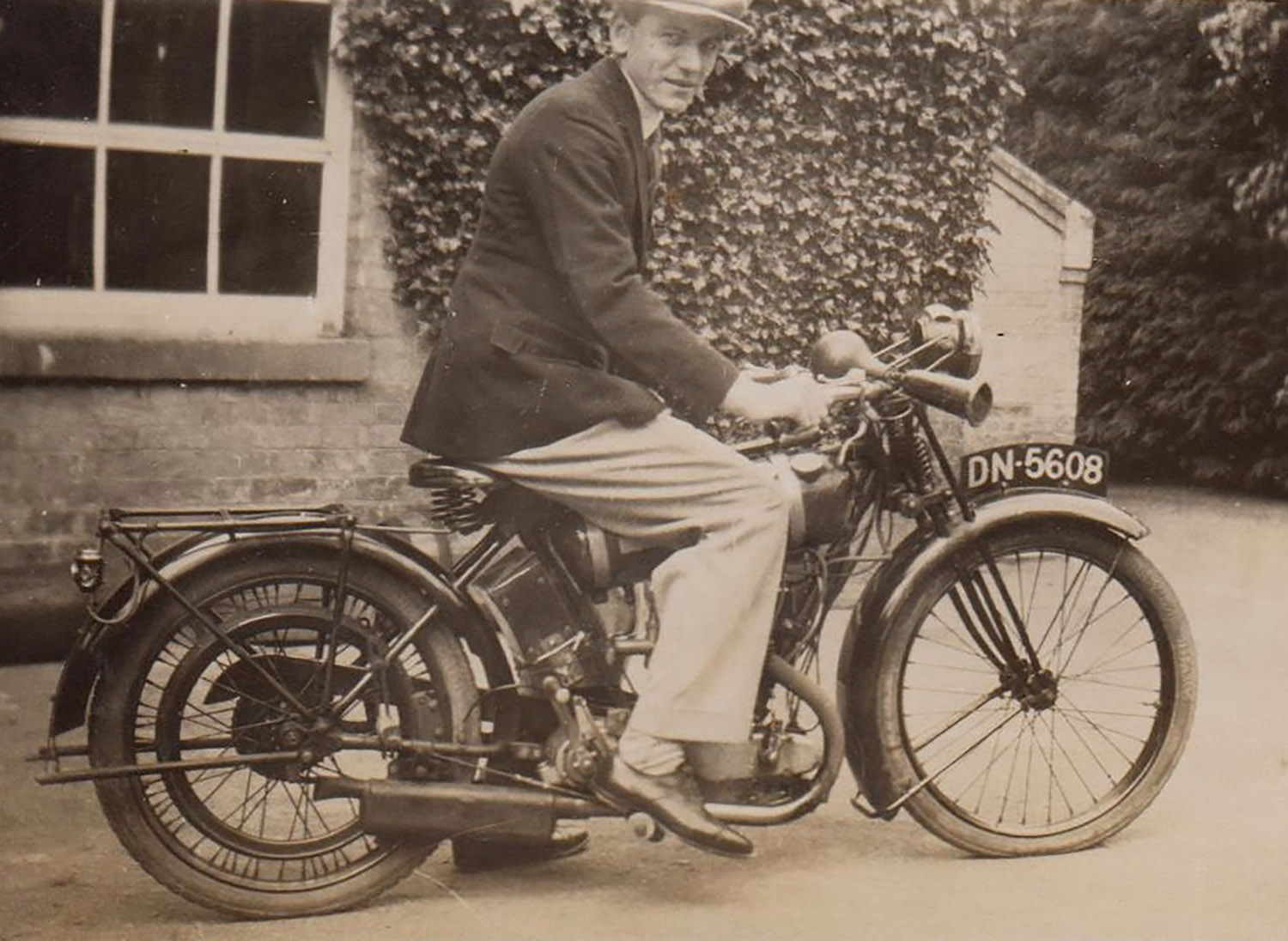
Harold Bishop was an unusual conscript. He first served in the Home Guard before being called up aged 39 to the 38th Signal Training Regiment, The Royal Regiment of Artillery. Many books and films about the experiences of soldiers during WWII paint a common view of young men leaving their girls in a whirlwind of kit bags and kisses before embarking.
In Harold and Joan: Letters Home we uncover the hidden story of an older husband and father as he leaves his wife Joan and their two daughters for the first time and undertakes training at Redford Barracks in Edinburgh.
“Arrived safely. Feeling not too bad. Hope you are all OK. Shall not be out for 7 days. Here for 5 months so cheerio for now. Will write letter soon. Love to all.”
Harold Bishop

His granddaughter Geraldine is responsible for transcribing and assembling these wartime letters for publication. She says, “My grandmother Joan had to move into care as her dementia progressed. My mother Marion and I had to empty the house for sale and this is when I discovered the letters in the dresser drawer. It was a surprise discovery. Both my mother and I were very touched to see the letters lovingly tied up in a blue ribbon.’
At the outbreak of war, Harold was a butler at Cardoness House near Gatehouse of Fleet, Dumfries and Galloway. He served in the Home Guard but was then called up in 1941, aged 39. He was sent to Redford Barracks, Edinburgh where he ultimately achieved the rank of Driver.
Harold’s subsequent letters reveal a treasure trove of documents and souvenirs from his training at Edinburgh and deployment to North Africa.
“This regiment is as strict and particular as the guards and reckon to turn you out as something super human.”
Harold Bishop
The collection includes his wartime driving licences, mementoes and postcard books, his medals, and a treasured photograph of Joan he kept in his wallet as a memory of home.
“It is a terrific waste of our lives sweetheart but I am hoping one day we will make up for it in full.”
Harold Bishop

Joan was left on her own in a Scottish lodge with her two young daughters. Their home was a tied cottage – they could only stay while Harold was employed as a butler, so once he was conscripted to the army, Joan had to start working at the big house, otherwise they would have lost their home. The fears she had about keeping her home with two young girls, Marion and Ann, is conveyed in his letters. Even though we only have his words, her story is shown there too.
During his training in Edinburgh, Harold frequently rebelled by sending his clothes home to Joan for washing.
“Now you will not get much washing, only vests which we are not supposed to wear. Also, I want to send my army socks to you to wash for the first time as they are two sizes too large at present but I will have to wait and see how I can wangle it for the kit inspection. Will you send my pyjamas as soon as you can?”
Harold Bishop
Geraldine says, “It makes me smile. Maybe he thought nobody could wash his clothes quite like Joan or maybe he didn’t trust the army laundry. It got him into trouble sometimes, but he still did it.”
One of the particular qualities of this book is the details that are shared of training. We follow Harold as he masters morse code and test after test as a driver.

After reading the faded and fragile handwritten letters, putting them into chronological order and transcribing them, Geraldine began researching additional details to include as historical notes.
The decision to publish these wartime letters has been a personal one, Geraldine says, “It is exactly the day-to-day cares of Harold that make these letters special when you consider the various environments he found himself in whilst writing them. They are peppered with thought-provoking references to the realities of war: rationing, bombing, the risks and difficulties of travel and ultimately, the tragedy of death. This was an uneducated, 39 year old, extremely traditional man who was suddenly expected to study, pass exams and face the prospect of armed combat.
“The letters are really personal because they show how soldiers like Harold strove to occupy their minds with anything but what was going on around them, particularly once they reached the front line.”
Perhaps the most significant presence in the collection, after Harold and his family, is the portrait these letters paint of the role of the Post Office during WWII as a lifeline between conscripts and loved ones.
“Darling this is Tuesday and still no parcel so I have the wind up a bit. I hope it hasn’t got lost or that anything is wrong at home. However, if I don’t receive it tomorrow, I will send this letter on.”
Harold Bishop

The letters also reveal the role of the censor. Harold seems to have been able to write freely about conditions in the training camp, but once he receives embarkation orders, the tone changes – although even there, ever the rule-breaker, he manages to record some key clues about his experiences.
“You would no doubt be relieved when you heard the news of our getting over that nasty obstacle the Mareth Line.”
Harold Bishop
Hidden details include information about the covert operation to transport troops from Great Britain to Egypt in June 1942. According to a reader who got in touch, this voyage was so secretive few official details have been shared in regimental diaries from WWII. But Harold inscribed sailing dates and other details on his cigarette case, leaving an indelible record to match the social history of life as a family man sent to the Front.
“Darling the hour has almost arrived. We leave tonight … I am feeling it very much but I must not weaken. I must be brave. I think that will be the best attitude to take for us all.”
Harold Bishop
Ultimately, publishing this extraordinary collection has been a deeply personal journey for Geraldine and her family.
“His letters are beautiful, but sad because he was obviously desperately missing his wife, his home and his little girls. But there is also a sense of relief because we know he came home again.”
Harold and Joan: Letters Home is available now in paperback and ebook